Mental Health
On World Suicide Prevention Day — Start the Conversation. It Can Save a Life.
Dr. Dharmin Shah28 September 2026
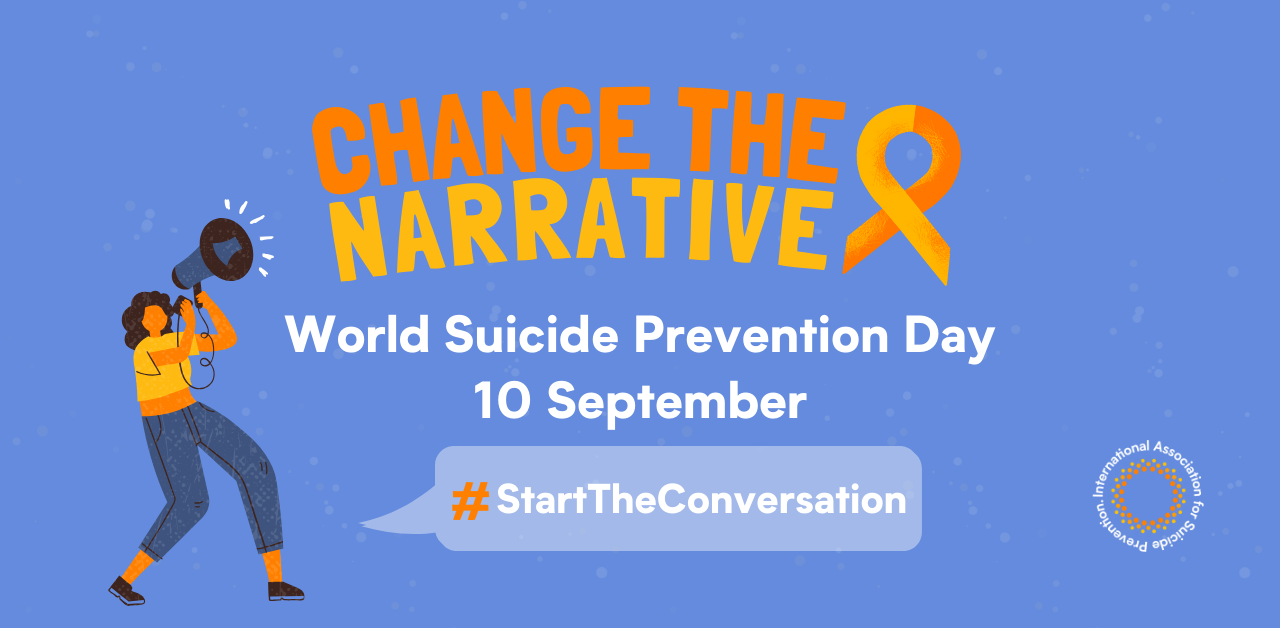
Every year on September 10th, the world pauses to talk about something most of us spend the rest of the year avoiding. This World Suicide Prevention Day, we want to say something clearly — suicidal thoughts are not a character flaw, not a sin, and not a permanent state. They are a symptom of a treatable condition. And the conversation you're afraid to start might be the one that saves someone you love.
There is a conversation that most Indian families never have.
Not because they don't care. Not because they haven't seen the signs. But because the words feel too heavy, too dangerous, too final — as if saying them out loud might somehow make them real. So the silence continues. And sometimes, in that silence, we lose someone.
This World Suicide Prevention Day 2026, the theme from the World Health Organization is simple and urgent: Changing the Narrative on Suicide. The call to action is three words — Start the Conversation. It sounds straightforward. In practice, for most families in Bhavnagar, in Gujarat, across India — it is one of the hardest things anyone can do.
This blog is an attempt to make it a little easier.
Why we don't talk about it — and why that silence costs us
In our culture, suicidal thoughts carry an enormous weight of shame. They are seen as weakness, as ingratitude, as something that happens in "other" families. When someone struggles with these thoughts, the fear of being judged — by family, by community, by God — often keeps them silent for months, sometimes years, before anyone knows.
What that silence does is this: it lets the illness underneath — almost always depression, sometimes anxiety, sometimes psychosis or substance dependence — go untreated. And untreated mental illness, like untreated physical illness, becomes more severe over time.
The person suffering is not dramatic. They are not seeking attention. They are in genuine, unbearable pain — and they have often concluded, wrongly, that there is no way out other than the one they are contemplating. That conclusion is the illness speaking, not the truth.
Suicidal thoughts are a symptom — not a verdict
This is the most important thing we want you to understand today.
Suicidal thoughts are a symptom of conditions like severe depression, bipolar disorder, psychosis, or addiction — the same way chest pain is a symptom of a cardiac problem. They tell us that something is deeply wrong medically and needs urgent attention. They do not tell us that the situation is hopeless, that the person cannot recover, or that the future cannot look different from today.
The majority of people who survive suicidal crises — and receive proper treatment — go on to live full, meaningful lives. Recovery is not an exception. With the right care, it is the most likely outcome.
Warning signs to watch for in someone you love
You do not need to be a psychiatrist to recognise when someone is struggling beyond what they can carry alone. Some signs that warrant gentle, immediate attention:
Talking about being a burden — phrases like "everyone would be better off without me," "I'm just causing problems," or "what's the point." These are not dramatic statements. They are distress signals.
Withdrawing from people and activities they previously valued — a sudden quietness, pulling away from family, stopping things that once brought joy.
Giving away things that matter to them — possessions, money, items of sentimental value.
A sudden calm after a period of visible distress — this can sometimes, counter-intuitively, indicate that a decision has been made and the weight of indecision has lifted.
Increasing use of alcohol or other substances as a way of numbing what they are feeling.
Changes in sleep — either not sleeping at all, or sleeping far more than usual.
What to do if you notice these signs
Ask directly. This is the advice that feels most counterintuitive and is, in fact, the most important. Research consistently shows that asking someone directly — "Are you thinking about suicide?" — does not plant the idea or make things worse. It almost always brings relief. It says: I see you. I'm not afraid of what you're carrying. You don't have to carry it alone.
Listen without rushing to fix. The most powerful thing you can do in that first conversation is not solve anything — it is to stay. To not pull away. To let them feel that their pain hasn't frightened you off.
Get professional help immediately. Suicidal thoughts in any form are a medical emergency. This is not something to manage at home with reassurance and prayer alone. A consultation with a psychiatrist or mental health specialist — here in Bhavnagar, or wherever you are — is not overreacting. It is the correct, necessary next step.
Do not leave them alone if you believe the risk is immediate. Stay with them, remove access to means if you can do so safely, and seek emergency help.
What NOT to do
Do not say "you have so much to be grateful for." Gratitude cannot override a neurological crisis. It also quietly communicates that their pain is unjustified — which is the opposite of what they need to hear.
Do not ask them to promise they won't do anything. This places a responsibility on them that they may not be able to carry in this moment.
Do not tell other family members in a way that turns it into a crisis of shame. The person's dignity and trust matter enormously right now.
Do not wait to see if it passes on its own. This is not the kind of thing that benefits from a wait-and-watch approach.
Depression and suicidal thoughts are treatable. Completely, meaningfully treatable.
At our neuropsychiatric hospital in Bhavnagar, we see patients every week whose families thought there was no road back. There was. There always is, when the right help arrives in time.
Depression — the condition that most commonly underlies suicidal thoughts — responds well to medication, to therapy, and in more severe cases, to interventional treatments like Ketamine infusion therapy, Brief Pulse Therapy and TMS, all of which are available right here in Bhavnagar. The brain that cannot feel hope right now is not permanently broken. It is ill. And it can heal.
This year's World Suicide Prevention Day theme — Changing the Narrative on Suicide — asks all of us to move from silence and misunderstanding toward openness, empathy, and support. In a city like Bhavnagar, in a state like Gujarat where mental health is still so often hidden behind closed doors, that shift begins with one conversation. One family member willing to ask the question. One person willing to pick up the phone and call a professional.
If you or someone you know needs help right now
Please reach out to these free, confidential crisis helplines available in India:
Vandrevala Foundation: 9999-666-555 — available 24 hours, 7 days a week, in multiple languages.
Tele MANAS (Government of India): 14416 — available 24/7, free, in regional Indian languages including Gujarati.
iCALL (TISS Mumbai): 9152987821 — available Monday to Saturday.
And if you are in Bhavnagar or the Saurashtra region — please reach out to us directly. We will see you. We will listen. And we will help you find a way through.
You are not a burden. Your pain is real. And you deserve to still be here — not just surviving, but genuinely living.
Start the conversation. Today.
More from the journal
Child & Adolecent
The Silent Struggle in Every Classroom: A Parent and Teacher’s Guide to School Children’s Mental Health
Read
Deaddiction
The Bhavnagar Hooch Tragedy (Lattha kand): What Methanol Does to the Body — And the Addiction Crisis Behind Every Illicit Drink
Read
Mental Health