mBPT · Modified Brief Pulse Therapy
The treatment with the worst reputation and the fastest response.
Modified Brief Pulse Therapy is the modern form of electroconvulsive therapy: an ultra-brief, precisely measured electrical pulse given under full general anaesthesia with muscle relaxation, so there is no visible convulsion, no pain and no awareness of the procedure. Nothing in psychiatry works faster for severe, life-threatening illness — and no treatment is more misunderstood. We use it selectively, explain it completely, and never without informed written consent.
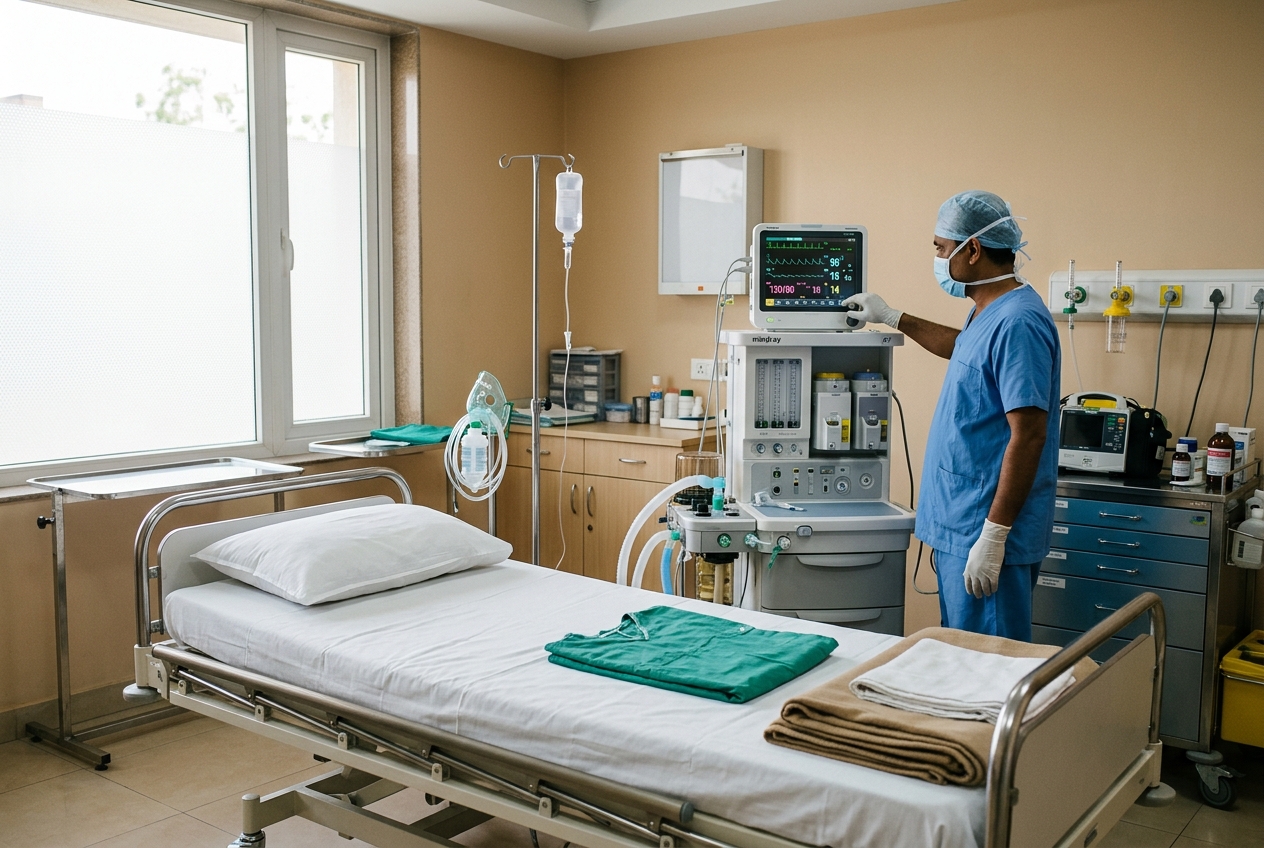
Neuromodulation Suite · Bhavnagar
Under anaesthesia, with an anaesthetist present and every vital sign monitored throughout.
How it works
The science, without the mystery.
Brief pulse, not the old sine wave
Modern machines deliver a square brief-pulse current — a fraction of the electrical charge used by the old sine-wave machines shown in films. Less charge means the same clinical benefit with far less effect on memory.
Anaesthesia and muscle relaxation
An anaesthetist gives a short-acting anaesthetic and a muscle relaxant before the pulse. You are asleep, your body stays still, and you remember nothing of the procedure. Oxygen, ECG, blood pressure and saturation are monitored continuously.
A controlled reset of brain chemistry
The brief seizure triggers a rapid, widespread release and re-regulation of neurotransmitters and growth factors — producing improvement in days where medication takes weeks.
Who it is for
Where this treatment genuinely helps.
When it is genuinely the right choice
- Severe depression with active, high suicidal risk
- Catatonia — not eating, not speaking, not moving
- Refusal of food and fluids, with rapid physical deterioration
- Severe post-partum psychosis or depression needing a fast recovery
- Psychotic depression with delusions of guilt, poverty or illness
- Treatment-resistant schizophrenia and severe mania not responding to medication
How we decide
- Two consultant psychiatrists review the indication independently
- Physical fitness and anaesthesia clearance are confirmed first
- Risks, benefits and alternatives are explained in your own language
- Written informed consent is taken from the patient wherever capacity allows
- The minimum effective number of sessions is planned, not a fixed 'package'
- Medication and therapy continue alongside, never as a replacement
What a course looks like
Step by step, start to finish.
- 01
Pre-procedure work-up
ECG, blood investigations, physician and anaesthesia assessment, and a review of every current medicine. Nothing to eat or drink for six hours before each session.
- 02
The session itself
Roughly 10–15 minutes in the procedure room: anaesthesia, muscle relaxant, oxygen, the pulse, then recovery. The stimulus itself lasts under eight seconds.
- 03
Recovery and observation
You wake within a few minutes and are observed until fully alert and oriented, usually 30–60 minutes. Mild confusion and headache on waking are common and short-lived.
- 04
Course and after
Typically 6–10 sessions, two or three per week, with response measured after every second session. Medication is then optimised to hold the gain, occasionally with maintenance sessions.
Safety
Side-effects and limits, stated plainly.
Possible side-effects
- Headache, jaw ache or muscle soreness for a few hours after a session
- Short-lived confusion on waking, clearing within 30–60 minutes
- Difficulty recalling events around the period of treatment, which usually recovers over weeks
- Nausea related to the anaesthetic
- Small, anaesthesia-related risks, which is why fitness is assessed before every course
When we will not do it
- Recent heart attack, unstable cardiac disease or uncontrolled heart failure
- Raised intracranial pressure or a space-occupying brain lesion
- Recent stroke or an unstable cerebral aneurysm
- Unfit for general anaesthesia on physician assessment
- Mild or moderate illness that can be treated safely with medication and therapy
Please read this
mBPT is not a punishment, not a 'shock' in the way films depict it, and never given without consent. If a family member has been advised this treatment and you are frightened by what you have heard, come and ask us directly — we will show you the room, the machine and the consent form before you decide.
Frequently asked
What patients and families always ask.
Find out if you are a candidate.
A 30-minute eligibility consultation at Kalanala, Bhavnagar. Honest answers, written costs, no pressure.