Post-Stroke Depression · Neuropsychiatry
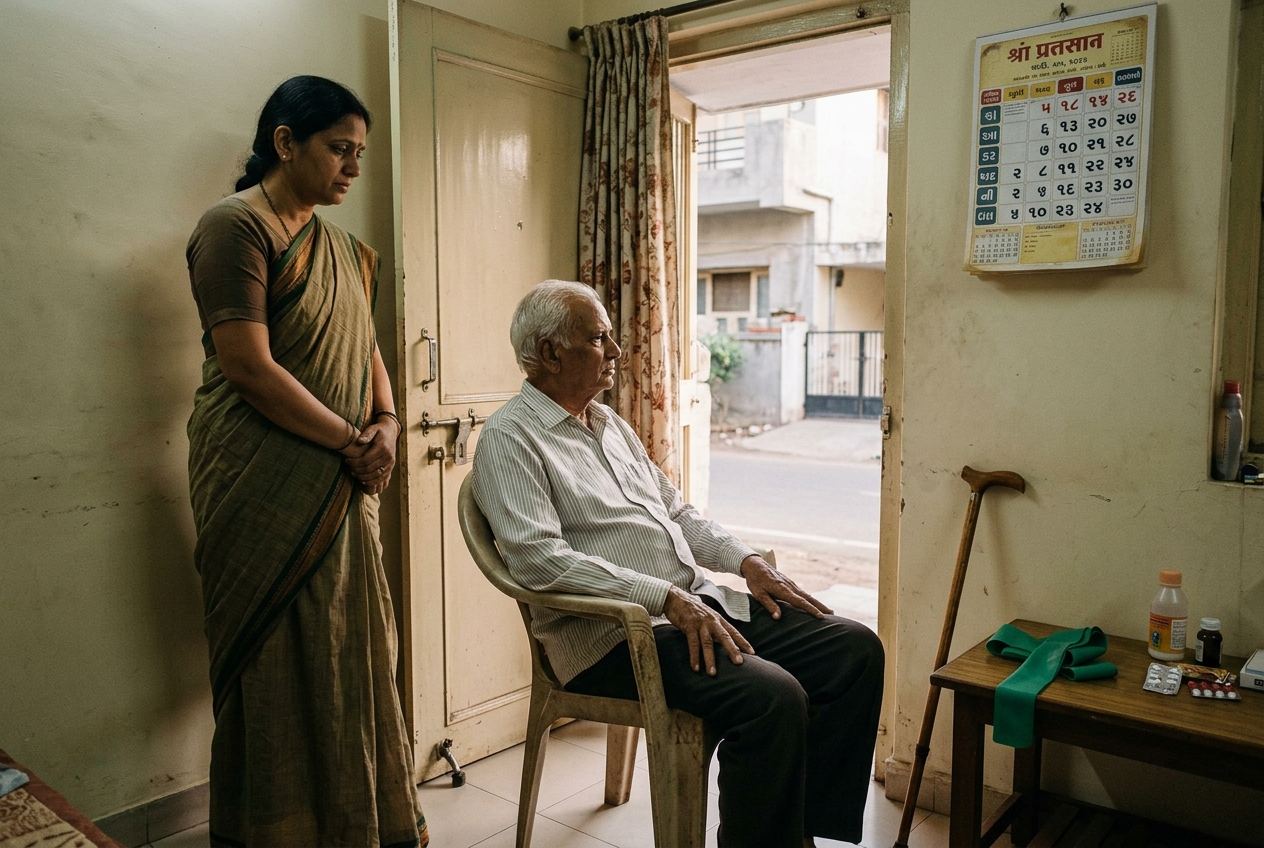
He is not being stubborn. The stroke took his mood too.
Depression after a stroke is not simply sadness about what has happened; it is a direct consequence of injury to the brain's mood circuits, and it affects roughly a third of survivors. Left untreated it slows physiotherapy, deepens disability and even raises mortality. Treated, patients engage with rehabilitation again — which is why this is one of the most worthwhile and most neglected treatments in stroke care.
Manas Neuropsychiatry Hospital · Bhavnagar
About one in three stroke survivors develops depression — and treating it measurably improves physical recovery.
Symptoms
How it actually shows up.
Mood & motivation
- Low mood, tearfulness and hopelessness since the stroke
- Apathy — no interest, no initiative, sitting all day, which families read as laziness
- Refusing or skipping physiotherapy and speech therapy
- Feeling a burden on the family, talk of being better off dead
- Irritability and anger outbursts that are new to the person
Distinctive after-stroke features
- Uncontrollable crying or laughing with little feeling behind it (emotional incontinence)
- Catastrophic reaction — sudden distress when a task cannot be done
- Anxiety and constant fear of a second stroke
- Sleep reversal, waking at night and dozing all day
- Memory, attention and planning difficulty — vascular cognitive impairment
Physical overlap
- Fatigue out of proportion to the physical weakness
- Loss of appetite and weight
- Increased pain complaints in the affected limb
- Poor compliance with blood-pressure, diabetes and anticoagulant medication
Why it happens
Causes we look for before prescribing.
- Direct injury to frontal and basal ganglia mood circuits — biology, not attitude
- Inflammation and neurotransmitter changes following the infarct or bleed
- Loss of function, independence, driving, work and role within the family
- Communication loss in aphasia, which isolates the patient inside the house
- Social isolation after the early flood of visitors stops
- Carer exhaustion and conflict within the household
- Untreated pain, poor sleep, and vitamin B12 or thyroid abnormalities
Our treatment approach
What treatment at Manas actually involves.
Assessment that separates apathy from depression
The two look identical to a family but need different handling, and apathy can occur with a perfectly normal mood. Aphasia-friendly assessment is used where speech is affected, together with the family's account of the change.
Review the medical picture
Blood pressure, sugar, thyroid, B12, sleep apnoea, pain and a check on every current medicine — some blood-pressure and pain drugs worsen low mood, and untreated pain alone can masquerade as depression.
Antidepressants chosen for the stroke patient
SSRIs such as sertraline and escitalopram are preferred, started low and increased slowly, with interactions with anticoagulants and antiplatelets taken into account. Emotional incontinence in particular responds quickly and often dramatically to a low dose.
Therapy and activity rebuilding
Small graded goals tied to rehabilitation targets, behavioural activation, and problem-solving therapy adapted for communication difficulty — delivered alongside physiotherapy rather than instead of it.
rTMS for resistant cases and rehabilitation support
Where medication is limited by side-effects or several other illnesses, rTMS is available in our own suite in Bhavnagar, and is also used to support motor and cognitive recovery after stroke.
rTMS treatment guideCarer support and second-stroke prevention
The family is taught the difference between 'cannot' and 'will not', how to set realistic daily targets, and how to protect their own health. Strict control of blood pressure, sugar and medication adherence is part of the mental health plan, not separate from it.
Please read this
Sudden new weakness, facial droop, slurred speech or confusion means another stroke — go to the nearest hospital immediately. Any talk of suicide in a stroke survivor is an emergency: call +91 94275 60101 the same day.
Frequently asked
Questions we are asked every week.
Treatment begins with one consultation.
OPD Mon – Sat, 9 AM – 8 PM at Kalanala, Bhavnagar. No referral needed. Emergency support 24×7.