Anxiety & Panic Disorder · OPD
Your heart is fine. Your anxiety needs treating.
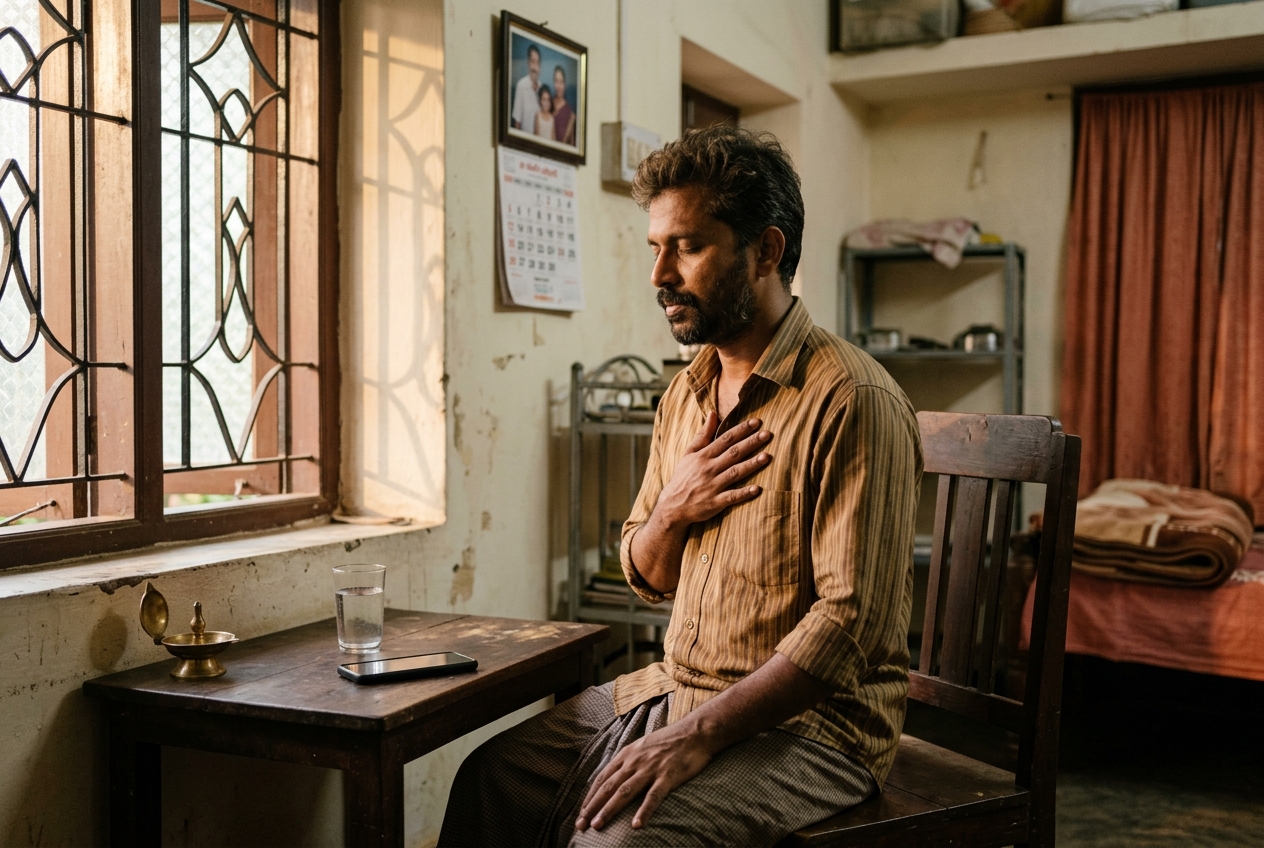
A panic attack feels exactly like a heart attack — and that is why so many of our patients arrive after a normal ECG, an angiography or three trips to casualty. Anxiety disorders are among the most treatable conditions in all of medicine: with cognitive behavioural therapy, and medication where needed, most people are functioning normally again within eight to twelve weeks.
Manas Neuropsychiatry Hospital · Bhavnagar
Most panic patients reach a cardiologist first. Once the ECG is normal, this is where the answer lies.
Symptoms
How it actually shows up.
During a panic attack
- Sudden palpitations and pounding heart
- Breathlessness, or feeling unable to take a full breath
- Chest tightness or pain
- Trembling, sweating, chills or hot flushes
- Dizziness, feeling faint or unreal
- Numbness or tingling in the hands and face
- An overwhelming fear of dying or losing control
Between attacks
- Constant worry about work, money, health and family
- Restlessness and inability to relax
- Avoiding travel, driving, lifts, crowds or being alone
- Repeatedly checking the pulse or blood pressure, seeking medical reassurance
- Fear of speaking in public or meeting people (social anxiety)
- Specific phobias — heights, needles, examinations, animals
- Disturbed sleep, irritability, poor concentration, acidity and IBS-like symptoms
Why it happens
Causes we look for before prescribing.
- Genetic sensitivity of the body's alarm system
- Thyroid overactivity, anaemia, low vitamin B12 and low blood sugar
- Excess caffeine, tobacco, alcohol withdrawal and cannabis
- Prolonged stress at work, in examinations or in a marriage
- A previous serious illness in self or family — a frequent trigger of health anxiety
Our treatment approach
What treatment at Manas actually involves.
Medical clearance, then a clear explanation
We review your ECG and blood reports, examine you, and then explain in plain language exactly what a panic attack is and why it cannot harm your heart. For many patients this single conversation reduces attack frequency.
Cognitive Behavioural Therapy with exposure
The core treatment. You learn to stop avoiding, to re-interpret bodily sensations correctly, and to deliberately face the situations you have been escaping — with a therapist guiding each step.
Breathing retraining & relaxation
Slow diaphragmatic breathing and progressive muscular relaxation, practised daily, break the hyperventilation cycle that drives most physical symptoms.
Medication where it is genuinely needed
SSRIs are the long-term treatment of choice. Short-acting anti-anxiety tablets are used sparingly and briefly — we actively help patients who have become dependent on them to taper off safely.
Lifestyle correction
Caffeine and tobacco reduction, regular exercise, fixed sleep timings and screen discipline. Small, boring, effective.
Follow-up until you are functioning, not just calmer
Reviews every 2–4 weeks, with the goal of you travelling, working and living without planning your day around fear.
Please read this
Chest pain should always be medically assessed the first time. If you have never had cardiac evaluation, get an ECG first — then come to us with the report.
Frequently asked
Questions we are asked every week.
Treatment begins with one consultation.
OPD Mon – Sat, 9 AM – 8 PM at Kalanala, Bhavnagar. No referral needed. Emergency support 24×7.