rTMS · FDA-approved · Non-invasive
No anaesthesia. No admission. You walk in and walk out.
Repetitive Transcranial Magnetic Stimulation uses a focused magnetic field — the same strength as an MRI pulse — to switch specific brain circuits back on. It is the most evidence-backed neuromodulation treatment available today, it involves no anaesthesia, no surgery and no systemic side-effects, and it is offered in our own suite in Bhavnagar by a TMS physician trained at AIIMS, New Delhi.
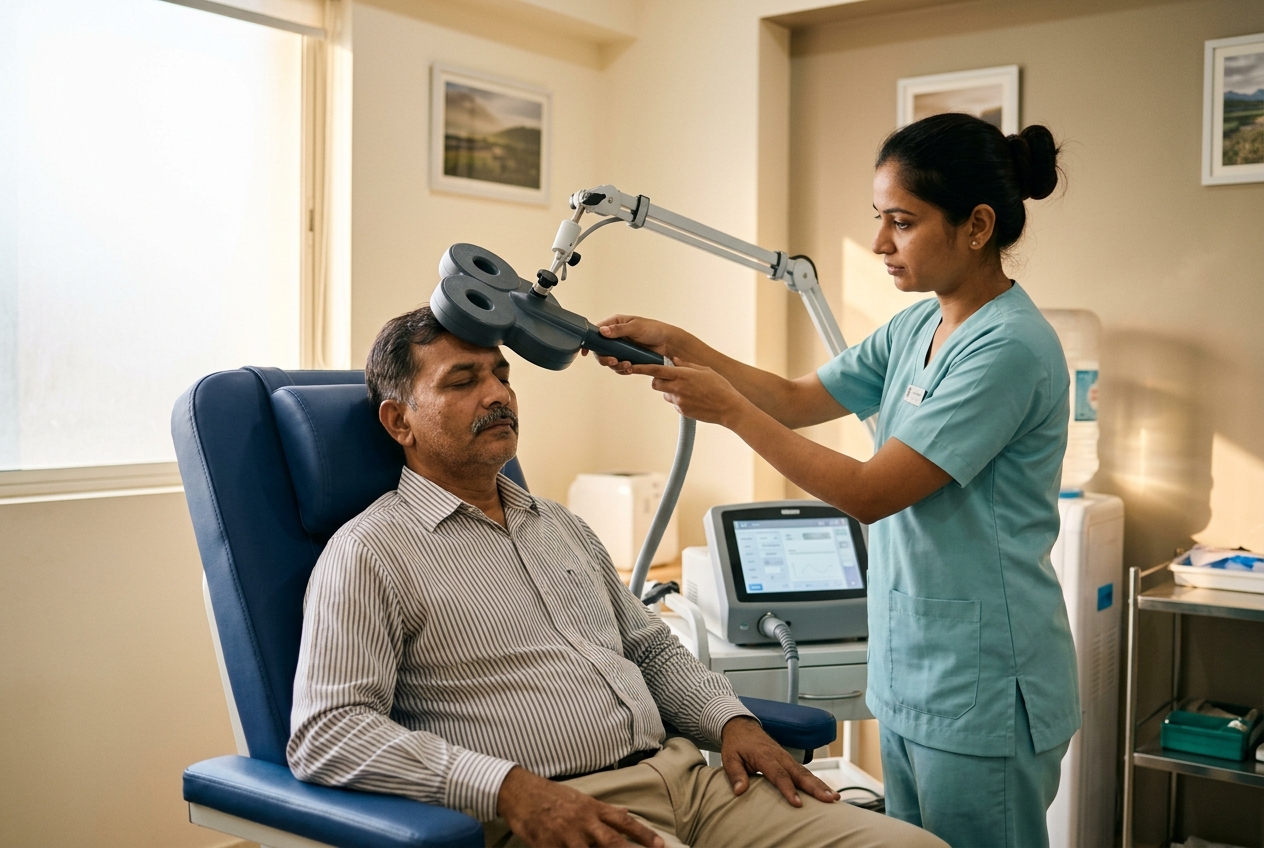
Neuromodulation Suite · Bhavnagar
A 30-minute session. You stay fully awake, then drive home or return to work.
How it works
The science, without the mystery.
A magnetic pulse, not an electric shock
A figure-of-eight coil rests against the scalp and delivers rapid magnetic pulses. The magnetic field passes painlessly through skin and skull and induces a very small electrical current only in the targeted patch of cortex, about 2–3 cm deep.
The under-active circuit is re-trained
In depression the left dorsolateral prefrontal cortex is typically under-active. High-frequency pulses delivered there over several weeks increase its excitability and restore its normal communication with the deeper mood-regulating circuits.
The change outlasts the session
Repeated stimulation produces lasting neuroplastic change — which is why the benefit continues after the course ends, rather than wearing off in hours like a tablet.
Who it is for
Where this treatment genuinely helps.
Strongest evidence
- Treatment-resistant depression — two or more failed antidepressant trials
- Obsessive Compulsive Disorder, using FDA-cleared deep protocols
- Depression where medication side-effects are intolerable
- Depression in pregnancy or breastfeeding, where tablets are best avoided
- Smoking cessation — an approved short course to cut nicotine craving
Also treated here
- Generalised anxiety and panic disorder
- Post-Traumatic Stress Disorder
- Negative symptoms and persistent hallucinations in schizophrenia
- Alcohol and opioid craving as part of a deaddiction plan
- Migraine and treatment-refractory chronic pain
- Post-stroke cognitive and motor rehabilitation
What a course looks like
Step by step, start to finish.
- 01
Day 0 — Eligibility consultation
A full psychiatric review, a check of past medication trials, and a safety screen for metal implants, pacemakers and seizure history. We will tell you honestly if rTMS is not the right answer for you.
- 02
Day 1 — Motor threshold mapping
We find the exact intensity your brain responds to by watching for a small thumb twitch, then set your dose as a percentage of it. Your stimulation is personalised, not standard.
- 03
Weeks 1–4 — Acute course
Daily sessions of about 30 minutes, five days a week. You sit awake in a chair, you can talk, and most patients go straight back to work or college afterwards.
- 04
Weeks 5–6 — Taper and review
Sessions are spaced out as response is measured on the same rating scale used at baseline. We then agree a maintenance plan — usually occasional booster sessions.
Safety
Side-effects and limits, stated plainly.
Possible side-effects
- Mild scalp tapping sensation or discomfort during the first few sessions
- Transient headache, which settles with a simple analgesic
- Brief facial or jaw muscle twitching while the coil is firing
- Temporary light-headedness immediately after standing up
When we will not do it
- Ferromagnetic metal implants, aneurysm clips or a cochlear implant in the head
- Cardiac pacemaker or implanted defibrillator
- Uncontrolled epilepsy or a very high seizure risk
- Active intracranial infection or a recent significant head injury
Please read this
rTMS has an excellent safety record — seizure risk is under 1 in 30,000 sessions. There is no memory loss, no anaesthesia and no sedation. Bring the full list of your current medicines and any old MRI or CT reports to the eligibility consultation.
Frequently asked
What patients and families always ask.
Find out if you are a candidate.
A 30-minute eligibility consultation at Kalanala, Bhavnagar. Honest answers, written costs, no pressure.