Insomnia & Sleep Disorders · OPD
Sleeping pills are not a treatment plan.
Most people with long-standing insomnia have been handed a sleeping tablet without anyone asking why they cannot sleep. Insomnia is usually a symptom — of anxiety, depression, thyroid disease, pain, sleep apnoea, alcohol use, shift work, or a sleep routine that has quietly collapsed. Cognitive Behavioural Therapy for Insomnia (CBT-I) outperforms sleeping pills in the long run, and we use it as the backbone of treatment.
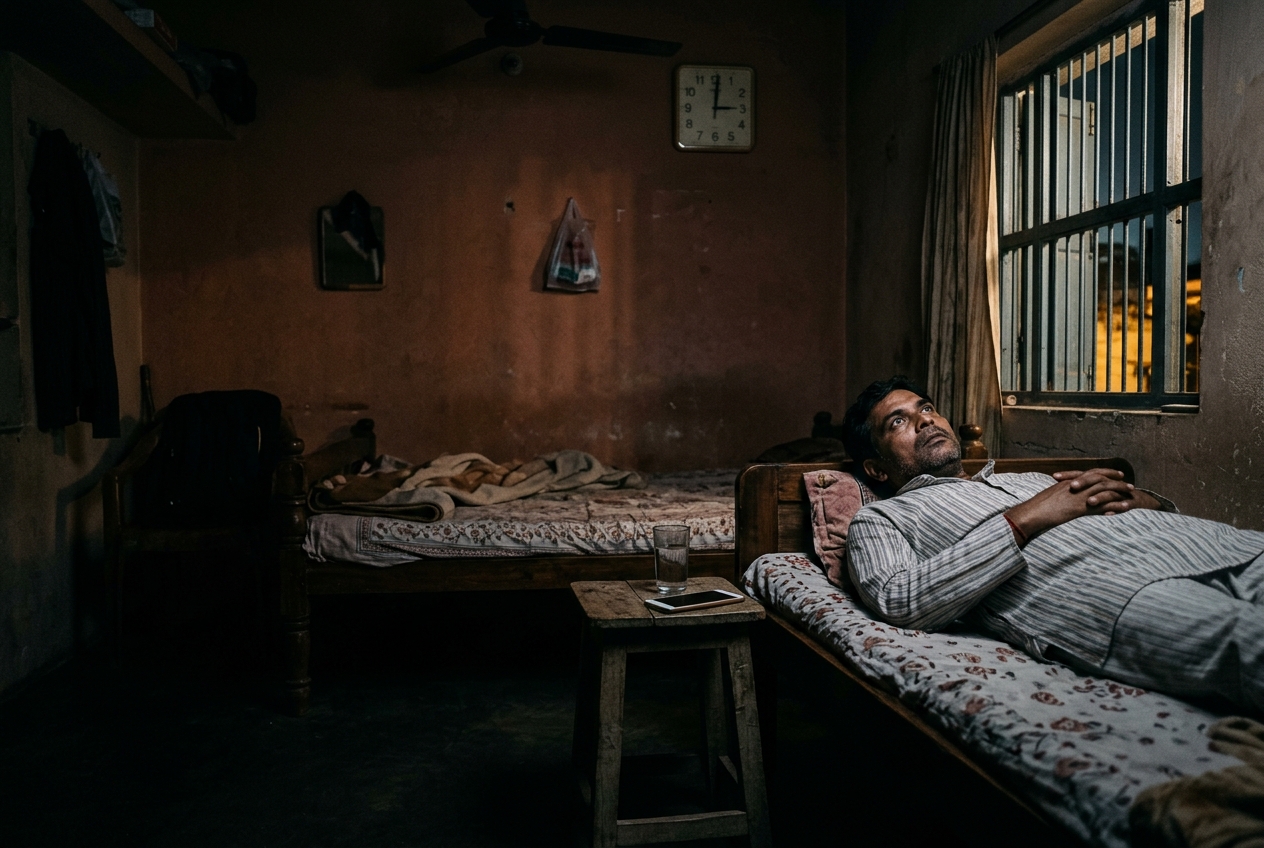
Manas Neuropsychiatry Hospital · Bhavnagar
Chronic insomnia is almost never just about sleep. We treat the cause, then the sleep follows.
Symptoms
How it actually shows up.
At night
- Lying awake more than 30–45 minutes after going to bed
- Waking repeatedly, or waking at 3–4 AM unable to sleep again
- Excessive dreaming and waking unrefreshed
- Loud snoring, gasping or breath-holding noticed by family (possible sleep apnoea)
- Restless, crawling sensations in the legs at night
- Needing a tablet, alcohol or the phone to fall asleep
During the day
- Fatigue, heaviness and low mood
- Poor concentration and memory lapses at work
- Irritability with family over small things
- Dozing off while travelling or driving — a danger sign
- Headache on waking, dry mouth, acidity
- Anxiety through the evening about whether sleep will come
Why it happens
Causes we look for before prescribing.
- Anxiety, depression and chronic stress — by far the commonest cause
- Obstructive sleep apnoea, especially with snoring, obesity or a thick neck
- Thyroid disorders, anaemia, diabetes, chronic pain and prostate problems
- Alcohol, tobacco, cannabis and late-evening caffeine — alcohol fragments sleep badly
- Long-term sleeping-pill dependence, which eventually worsens sleep quality
- Shift duty, night-time screen use, irregular meal and sleep timings
- Restless legs syndrome and iron deficiency
Our treatment approach
What treatment at Manas actually involves.
Finding the real cause
A detailed sleep history covering timings, substances, snoring and mood, with thyroid, haemoglobin and sugar testing where indicated — and a sleep study referral if apnoea is suspected.
CBT-I — the gold standard
Sleep restriction, stimulus control, scheduled worry time and correction of sleep beliefs. Four to eight structured sessions, with gains that last years after the sessions end.
Sleep hygiene that is actually practical
Fixed wake-up time, no clock-watching, bed used only for sleep, a caffeine cut-off and an evening wind-down that fits a real Indian household schedule.
Tapering sleeping pills safely
If you have been on alprazolam, zolpidem or clonazepam for months or years, we substitute and taper gradually — never abruptly — while CBT-I takes over. This is routine work for us.
Treating the driver, not just the symptom
Where insomnia sits on top of depression, anxiety or alcohol use, treating that condition properly is what finally restores sleep.
Depression treatmentReview until sleep is genuinely restored
Follow-up every 2–4 weeks with a simple sleep diary, so improvement is measured rather than guessed.
Please read this
If you doze off while driving or riding, treat it as urgent and get assessed before you next take the wheel. Loud snoring with daytime sleepiness needs a sleep study, not a sleeping pill.
Frequently asked
Questions we are asked every week.
Treatment begins with one consultation.
OPD Mon – Sat, 9 AM – 8 PM at Kalanala, Bhavnagar. No referral needed. Emergency support 24×7.