ADHD in Children · Child & Adolescent OPD
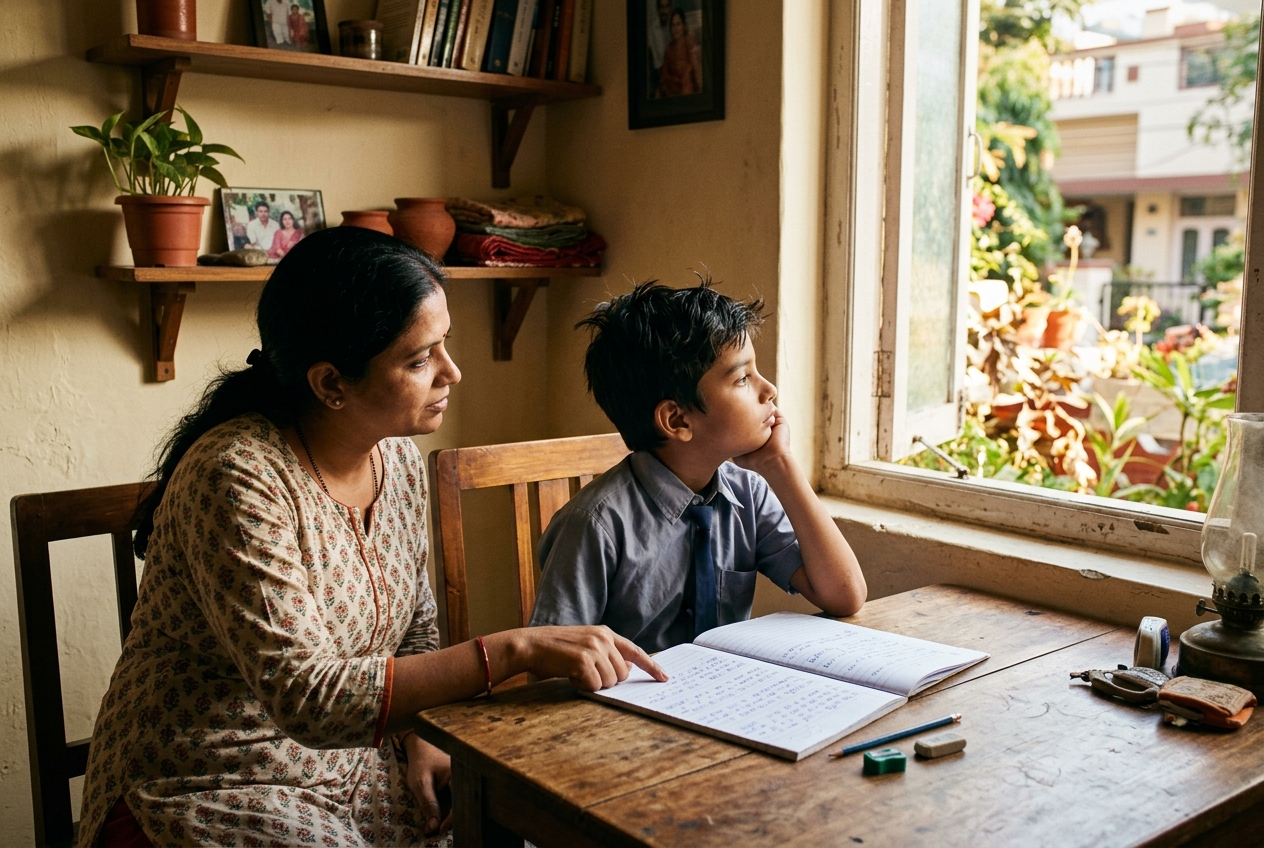
He is not a bad child. His brain runs faster than the class.
Attention Deficit Hyperactivity Disorder is a developmental condition of attention, impulse control and activity level — not the result of bad parenting, too much television, or a lack of discipline. Untreated, it quietly damages school results, confidence and family peace for years. Treated, most children improve markedly, and the bulk of our work is behavioural training with parents and teachers rather than medication.
Manas Neuropsychiatry Hospital · Bhavnagar
Roughly one child in twenty has ADHD. Most are called lazy or naughty for years before anyone assesses them.
Symptoms
How it actually shows up.
Inattention
- Cannot stay with homework for more than a few minutes
- Careless mistakes despite knowing the answers
- Appears not to listen even when spoken to directly
- Loses pencils, books, water bottles and uniforms repeatedly
- Easily distracted by noise or movement; daydreams in class
- Avoids tasks needing sustained mental effort
- Performance far below what parents and teachers know he can do
Hyperactivity & impulsivity
- Cannot sit still; fidgets, climbs and runs indoors
- Talks excessively and blurts out answers
- Cannot wait for a turn; interrupts games and conversations
- Acts without thinking — running onto the road, jumping from heights
- Frequent school complaints about disturbing the class
- Temper outbursts and rapid frustration
- Difficulty making or keeping friends
Why it happens
Causes we look for before prescribing.
- Largely genetic — one parent often had similar childhood difficulties
- Prematurity, low birth weight and birth complications
- Lead exposure and, less commonly, thyroid problems
- Excessive screen time worsens symptoms but does not cause ADHD
- Conditions that mimic ADHD and must be excluded: hearing or vision problems, learning disability, absence seizures, anxiety, sleep deprivation, iron and vitamin deficiency, and autism spectrum disorder
Our treatment approach
What treatment at Manas actually involves.
Proper assessment, not a five-minute label
Detailed developmental history, school report and teacher input, standardised rating scales, plus screening of hearing, vision, sleep, haemoglobin and thyroid — because several conditions look exactly like ADHD.
Parent behaviour training
The most powerful intervention we have. Parents learn clear instruction-giving, immediate reward systems, consistent consequences, structured routines, and how to break the shouting cycle that exhausts everyone.
School collaboration
We provide practical written recommendations for teachers — front-row seating, short broken-up tasks, movement breaks, extra time — and documentation for examination accommodations where appropriate.
Behaviour therapy for the child
Attention-building activities, impulse-control games, social skills work and self-monitoring, pitched to the child's age.
Medication where truly indicated
For moderate to severe ADHD, medication is safe, well-studied and often transformative for school performance. We start low, monitor height, weight, appetite and sleep at every visit, and always pair it with behavioural work.
Treating what travels with ADHD
Learning disability, dyslexia, anxiety, oppositional behaviour, bedwetting and tics commonly co-exist and are addressed together — otherwise progress stalls.
Please read this
If your child is being repeatedly beaten or humiliated at home or school for behaviour he cannot control, get an assessment now. The damage to self-esteem is often harder to treat than the ADHD itself.
Frequently asked
Questions we are asked every week.
Treatment begins with one consultation.
OPD Mon – Sat, 9 AM – 8 PM at Kalanala, Bhavnagar. No referral needed. Emergency support 24×7.