Mental Health
"Don't Take Tension" Isn't a Treatment — What People with Depression Actually Need to Hear
Dr. Dharmin Shah31 July 2026
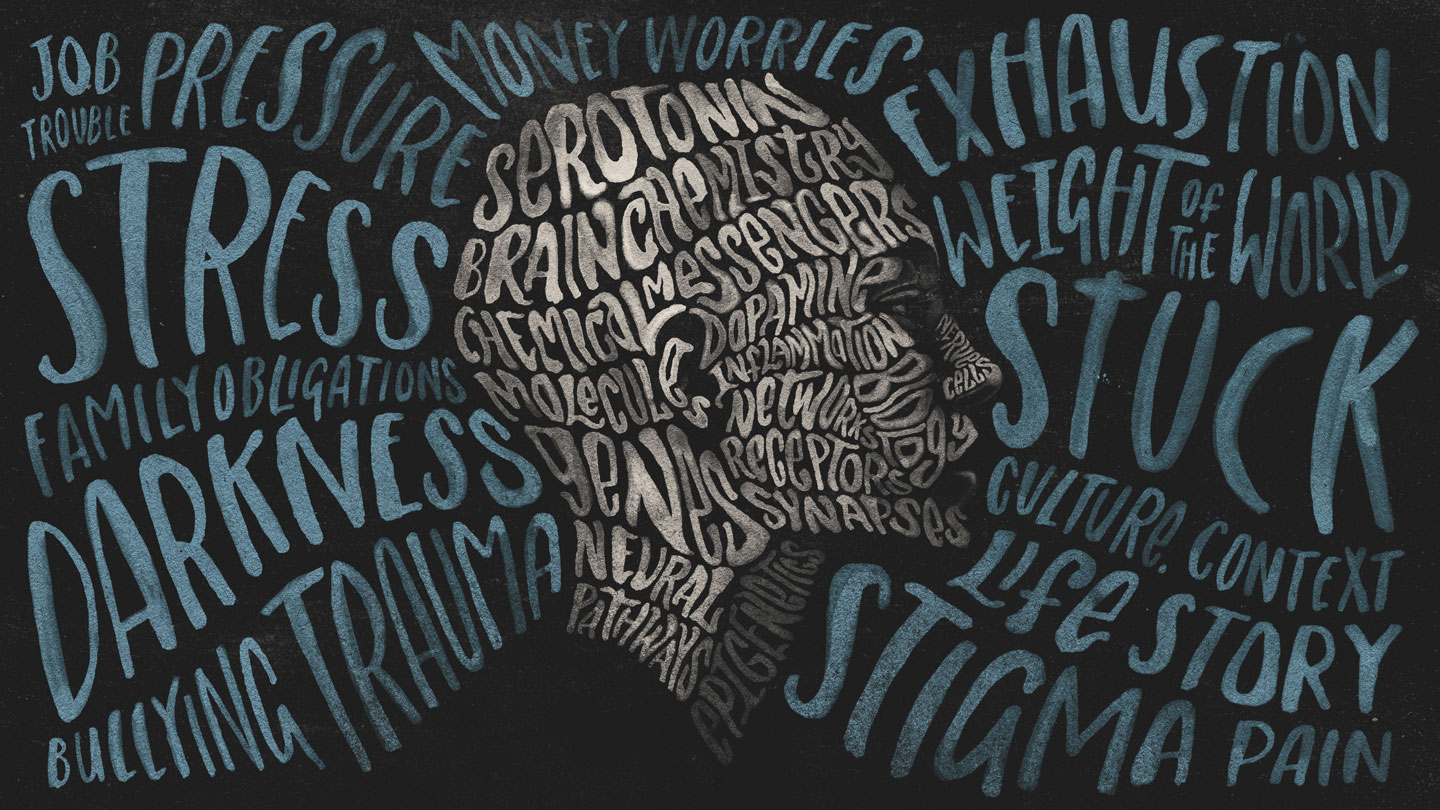
If you've been told to "just stay positive" or "stop overthinking" and you're still not okay, this blog is for you. Depression isn't a mindset problem. And you deserve more than advice that sounds helpful but changes nothing.
Let's start with something that needs to be said plainly.
If you've been feeling low for weeks. If getting out of bed feels like climbing a mountain. If nothing excites you anymore — not food, not people, not things that used to bring you joy. If you're exhausted in a way that sleep doesn't fix because you are not able to sleep. If you feel like a burden, or like the world would simply carry on without noticing if you quietly disappeared from it
You are not being dramatic. You are not weak. And you are most certainly not just "taking too much tension."
The advice that sounds kind but quietly causes HARM
Somewhere along the way, most people with depression in India hear some version of the same thing. From relatives. From well-meaning friends. Sometimes — and this is the part that deserves to be spoken about honestly, from doctors themselves.
You go to a physician because your body doesn't feel right. You've had headaches that won't quit, a heaviness in your chest, no appetite, no sleep. You sit across from a doctor, maybe a general physician, maybe a specialist you've been referred to — and after the examination, after the tests come back showing nothing clearly wrong, you are told: "Aap bilkul theek ho. Bas thoda zyada soch rahe ho. Positive rehna seekho. Tension mat lo."
You are fine. Just stop overthinking. Learn to be positive. Don't take stress.
And you walk out of that clinic holding a prescription for a vitamin supplement, feeling more confused and more alone than when you walked in.
Because something IS wrong. You know it is. But the person who was supposed to help just told you it isn't. So now you carry both the illness and the doubt, wondering if it's all in your head, wondering if you're making it up, wondering if you simply aren't trying hard enough to be happy.
This is one of the quietest and most damaging failures in how we approach mental health in our medical system. And it happens far more than it should.
Why depression cannot be thought away
Depression is not a reaction to difficult circumstances that will lift once things get better. It is not a temporary emotional slump. And it is absolutely not the result of someone choosing to see the glass as half empty.
At its core, depression involves measurable changes in brain chemistry, particularly in how neurotransmitters like serotonin, dopamine, and norepinephrine function. The circuits in the brain that regulate mood, motivation, sleep, appetite, concentration, and the ability to feel pleasure are genuinely not working the way they should. This is not philosophy. This is neuroscience.
Telling someone with depression to "just think positive" is a bit like telling someone with a broken leg to just try walking it off. The intent may be kind. The advice, however, completely misunderstands what is broken and why.
Positivity is a wonderful quality in a healthy brain. In a depressed brain, the very mechanism that allows a person to feel hope, motivation, or even basic relief is impaired. You cannot willpower your way out of a biological condition. Nobody ever could.
What general practitioners often miss — and why it matters
It's important to say this carefully, because most general physicians and specialists are deeply committed to their patients' wellbeing. The problem is not intention. The problem is training and time.
Depression frequently doesn't arrive wearing its own name. It comes disguised. It comes as chronic fatigue that no amount of rest fixes. It comes as persistent body pain with no clear physical cause — backaches, headaches, chest tightness that cardiology clears. It comes as digestive issues, hormonal irregularities, recurring infections, weight changes. It comes as a patient who sits quietly in the chair and says "I don't know, I just don't feel right" without being able to say much more.
A busy general practitioner running through twenty patients in a morning may run the blood work, find nothing alarming, and offer reassurance. That reassurance, while well-meant, can land as invalidation. "The tests are normal" does not mean the person sitting across the table is.
What this patient often needs — and what the tests will never show — is a referral to a psychiatrist. Not because something is catastrophically wrong. But because the kind of help they need requires someone trained to look for exactly what they're experiencing.
If you or someone in your family has been to multiple doctors, been told everything is fine, been handed vitamin tablets and some symptomatic treatment and sent home, and is still not okay — please do not stop there. Your body's tests being normal is not the same as your mental health being fine. These are different conversations, requiring different expertise.
What actually works for depression
The good news, and it is genuinely good news — is that depression is one of the most treatable conditions in all of medicine. The majority of people who receive the right care do significantly better. Not someday. Within weeks, for many.
Here is what treatment actually looks like:
Medication: Antidepressants work by restoring the chemical balance in the brain that depression disrupts. They are not addictive. They do not change your personality. They do not make you feel artificially happy. What they do, when correctly prescribed, is gradually lift the biological floor — giving the brain enough stability to begin healing. They typically take two to four weeks to show meaningful effect, and they work best when combined with therapy.
Psychotherapy: Talking to a trained professional — particularly through approaches like Cognitive Behavioural Therapy (CBT) — helps a person understand the patterns of thought and behaviour that depression creates and reinforces. This is not just talking about your feelings. It is structured, evidence-based work that changes the way the brain processes experience over time.
Lifestyle support: Sleep, physical movement, nutrition, and reducing isolation all genuinely support recovery — but as additions to treatment, not replacements for it. Exercise is mood-supportive, but it cannot treat a clinical depressive episode on its own. It is one piece, not the whole answer.
Interventional options for severe cases: For patients who haven't responded to medications and therapy — which does happen — there are now safe and effective interventional options like TMS (Transcranial Magnetic Stimulation) and Brief Pulse Therapy that are available right here in Bhavnagar at MANAS Hospital. These are not last resorts. They are powerful, modern tools that bring relief when other paths haven't been enough.
To the person reading this who is exhausted from pretending to be fine
You have probably tried being positive. You've probably told yourself to be grateful, to count your blessings, to snap out of it. And if willpower alone could have fixed this, you would have fixed it already — because anyone who has lived with depression knows that nobody is trying harder to get better than the person inside it.
What you haven't yet tried or maybe haven't been allowed to try is proper care. The kind that addresses what is actually happening in your brain, not just what is happening in your attitude.
Depression is not a character flaw. It is not weakness. It is not the result of insufficient faith, insufficient effort, or insufficient gratitude. It is an illness. And like every illness, it responds to the right treatment.
You deserve that treatment. Not someday. Now.
If you're in Bhavnagar or anywhere in the Saurashtra region and you've been carrying this for too long, please reach out to us. We'll listen, not to correct you, not to reassure you that you're fine when you're clearly not, but to actually understand what you're experiencing and help you find your way through it.
Because "just stay positive" was never going to be enough. And you always deserved better than that.
More from the journal

Child & Adolecent
The Silent Struggle in Every Classroom: A Parent and Teacher’s Guide to School Children’s Mental Health
Read
Mental Health
On World Suicide Prevention Day — Start the Conversation. It Can Save a Life.
Read
Deaddiction